Insurance
How to insure a luxury watch in the UK
Home contents or specialist cover, single-item limits, valuations, what is usually excluded, and the documents you should keep. A plain-English guide.
· 3 min read · Wrist Guard LDN
If your watch were lost or stolen tomorrow, would your insurance replace it? For many owners the honest answer is "not fully". Here is what to check. This is general information, not financial advice: always read your own policy and ask your insurer or broker if you are unsure.
Check your home contents policy
Most home contents policies have a single-item limit, the most they will pay for any one item unless it is listed separately. A luxury watch is very often worth more than that limit. If yours is, it needs to be named on the policy as a specified item, with its value.
Also check whether the policy covers the watch away from home. Cover for personal possessions outside the house is often an optional extra, and without it a watch stolen in the street may not be covered at all.
Consider a specialist insurer
Specialist jewellery and watch insurers focus on high-value items. Depending on the policy, they may offer worldwide cover, agreed values, and the option of a repair by the brand or an authorised service centre. Compare the wording, not just the price.
Agreed value or replacement?
Policies settle claims in different ways:
- Agreed value: you and the insurer agree the watch's value up front, and that is what is paid for a total loss.
- Replacement: the insurer replaces the watch with the same or a similar model, which can be difficult for discontinued or hard-to-find references.
Ask which applies, and what happens if your model is no longer available.
Keep the valuation up to date
Watch prices move. A valuation from a few years ago may leave you underinsured today. Get an independent valuation from a qualified valuer, and update it regularly, especially for models whose prices have risen.
What is usually excluded
Read the exclusions carefully. Common ones include:
- Wear and tear, including scratches, scuffs and gradual deterioration
- Mysterious disappearance, where you cannot say how or when the watch was lost
- Unattended items, such as a watch left in a car or a gym locker
- Security conditions, such as a requirement to keep valuable items in a safe of a certain rating
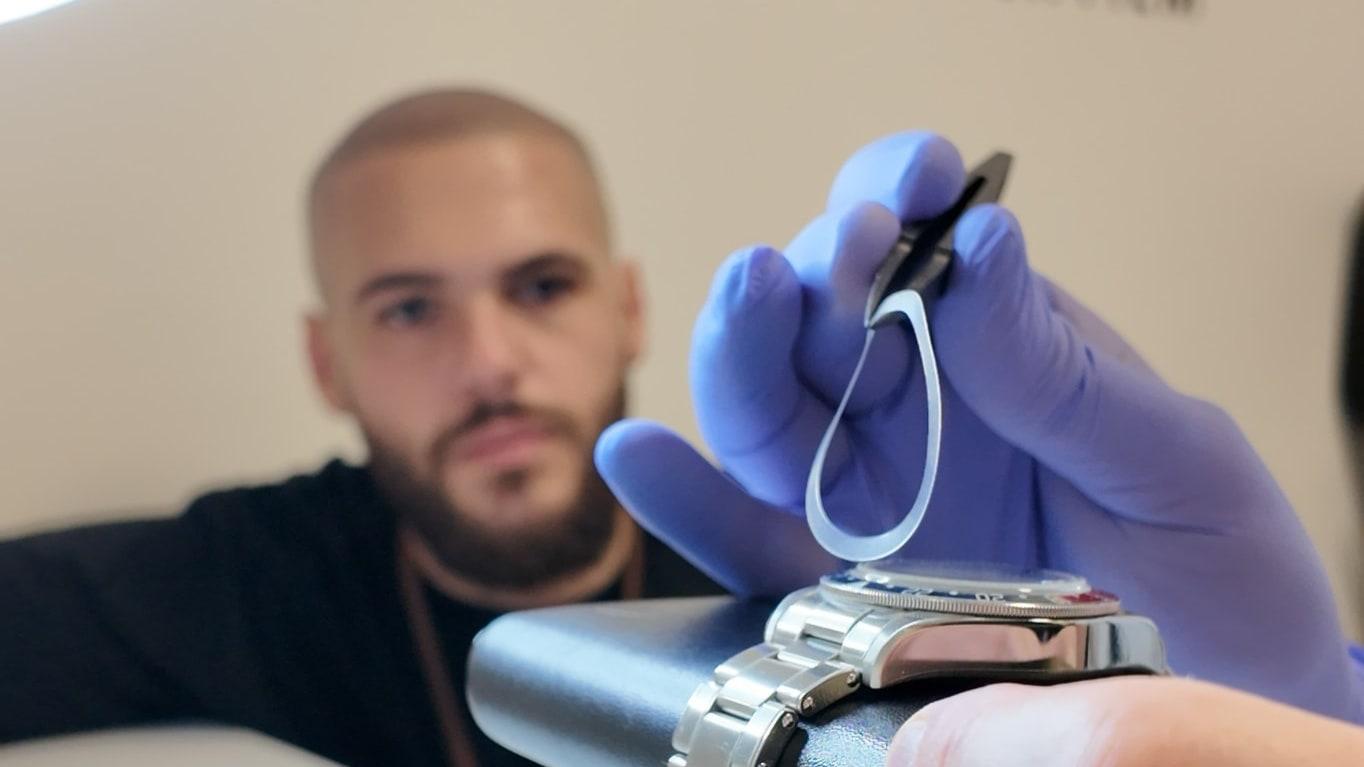
The first point matters. Insurance is for the disaster: theft, loss and accidental damage. Everyday scratches are almost never covered, which is where protection film comes in.
Keep the paperwork
Keep these somewhere safe, away from the watch, with copies in the cloud:
- the receipt and any valuation
- the box, warranty card and papers
- the serial and reference numbers
- clear, recent photographs
Insurance covers the disaster. Protection covers the everyday.
The two work together: insurance for the rare event, and invisible protection for the daily marks that no policy will pay to remove. See also our guide to keeping your watch safe.